

As a trusted supplier of laser coding machines, I'm excited to share with you the working principle of these remarkable devices. Laser coding machines have become an indispensable tool in various industries, offering high - precision, permanent, and efficient coding solutions. In this blog, we'll take a deep dive into how these machines operate, from the basic concepts to the detailed processes.
Basic Concept of Laser Coding
At the heart of a laser coding machine is the laser itself. A laser is a device that emits a highly concentrated beam of light through a process called stimulated emission. This beam of light has unique properties such as high intensity, coherence, and monochromaticity. When this laser beam interacts with the surface of a material, it can cause various physical and chemical changes, which are used to create the desired codes.
Components of a Laser Coding Machine
Before delving into the working principle, it's essential to understand the main components of a laser coding machine:
- Laser Source: This is the core of the machine, responsible for generating the laser beam. Different types of lasers are used in coding machines, such as CO₂ lasers, fiber lasers, and UV lasers, each with its own characteristics and suitable applications.
- Optical System: The optical system consists of lenses, mirrors, and beam expanders. Its main function is to shape, direct, and focus the laser beam onto the target surface. The quality of the optical system directly affects the clarity and precision of the coding.
- Control System: The control system is like the brain of the laser coding machine. It receives input from the user, such as the code content, size, and position, and then controls the movement of the laser beam and other components to ensure accurate coding.
- Workbench or Conveyor: Depending on the application, the laser coding machine may be equipped with a workbench for stationary objects or a conveyor for continuous coding of moving products.
Working Process of a Laser Coding Machine
The working process of a laser coding machine can be divided into the following steps:
1. Preparation
First, the operator needs to prepare the coding content. This can be done through a computer interface connected to the control system. The operator inputs the text, barcode, logo, or other information that needs to be coded. The control system then converts this digital information into a series of control signals.
Next, the product to be coded is placed on the workbench or fed onto the conveyor. The position and orientation of the product are adjusted to ensure that the coding will be applied in the correct location.
2. Laser Beam Generation
The laser source is activated under the control of the control system. For example, in a CO₂ laser, an electrical discharge excites the CO₂ gas molecules in the laser cavity. Through a process of stimulated emission, these excited molecules release photons, which are then amplified and form a coherent laser beam.
3. Beam Shaping and Focusing
The generated laser beam enters the optical system. The beam expander first enlarges the diameter of the laser beam, which helps to improve the divergence angle and the quality of the beam. Then, the lenses and mirrors in the optical system shape the beam and focus it onto the surface of the product. The focused laser beam has a very small spot size, which is crucial for achieving high - precision coding.
4. Interaction with the Material
When the focused laser beam hits the surface of the product, it interacts with the material in different ways depending on the type of material and the laser used:
- Ablation: In some cases, the high - energy laser beam vaporizes or removes a thin layer of the material's surface. This is commonly used for coding on plastics, wood, and some metals. For example, when coding on a plastic bottle, the laser ablates the surface layer of the plastic, leaving a visible mark.
- Color Change: The laser can also cause a chemical or physical change in the material that results in a color change. This is often seen in coding on some metals and coated materials. The heat from the laser can induce oxidation or other chemical reactions on the surface, creating a contrast with the surrounding area.
- Foaming: For certain materials, the laser can cause the material to foam. This is useful for coding on materials like rubber and some polymers, where the foamed area creates a visible and durable code.
5. Coding Execution
The control system precisely controls the movement of the laser beam according to the pre - set coding pattern. This can be achieved through galvanometer scanners, which are small, high - speed mirrors that can deflect the laser beam in two dimensions. As the laser beam moves across the surface of the product, it creates the desired code.
6. Quality Inspection
After the coding is completed, some laser coding machines are equipped with inspection systems. These systems use cameras or sensors to check the quality of the code, such as the clarity, integrity, and accuracy of the barcode. If any defects are detected, the machine can alert the operator or reject the product.
Applications and Advantages of Laser Coding Machines
Laser coding machines are widely used in many industries, including food and beverage, pharmaceutical, electronics, and automotive. In the food and beverage industry, they are used to code expiration dates, batch numbers, and ingredients on packaging. In the pharmaceutical industry, laser coding ensures the traceability and authenticity of drugs.

The advantages of laser coding machines are numerous. Firstly, they offer high - precision coding, which is essential for applications where small and detailed codes are required. Secondly, the codes are permanent and resistant to wear, fading, and chemical solvents, ensuring long - term readability. Thirdly, laser coding is a non - contact process, which means there is no physical damage to the product during coding. This is especially important for delicate or sensitive materials.
Related Products and Further Reading
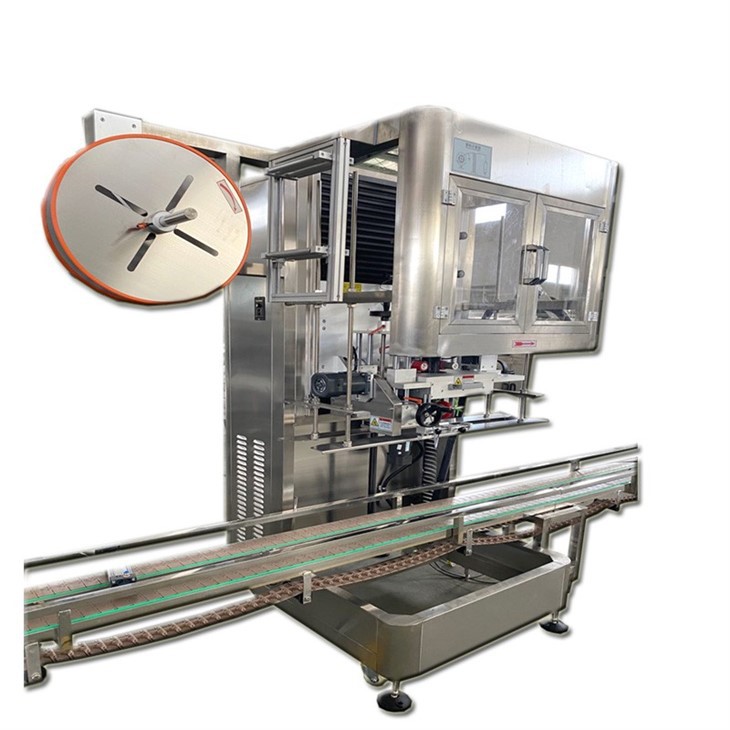
If you're interested in other labeling solutions, we also offer a range of labeling machines, such as the Large Bucket Water Sleeve Labeling Machine, Fully Automatic Sleeve Labeling Machine, and Double Head Sleeve Labeling Machine.
Contact for Purchase and Negotiation
If you're considering purchasing a laser coding machine for your business, we're here to assist you. Our team of experts can provide you with detailed product information, technical support, and customized solutions to meet your specific requirements. Whether you're a small - scale manufacturer or a large - scale enterprise, we have the right laser coding machine for you. Please reach out to us to start the negotiation process and take your coding needs to the next level.
References
- "Laser Technology for Manufacturing" by John C. Ion.
- "Industrial Laser Handbook" edited by Peter F. W. Sigrist.
- Technical documents from leading laser coding machine manufacturers.