

In the world of product identification and traceability, laser coding machines have emerged as a powerful tool for industries across the globe. They offer permanent, high - quality marking solutions that are resistant to wear, chemicals, and environmental factors. Among the various types of laser coding machines, CO2, fiber, and UV lasers stand out, each with its unique characteristics and applications. As a trusted laser coding machine supplier, I am here to shed light on the differences between these three types of machines to help you make an informed decision for your business.
CO2 Laser Coding Machines
CO2 laser coding machines are one of the most widely used types in the industry. These machines use a gas mixture, primarily carbon dioxide, as the laser medium. When an electrical discharge is applied to the gas mixture, it stimulates the emission of infrared light at a wavelength of around 10.6 micrometers.
One of the key advantages of CO2 laser coding machines is their versatility. They can mark a wide range of materials, including paper, cardboard, plastic, wood, glass, and some types of coated metals. This makes them suitable for a variety of industries, such as food and beverage, pharmaceutical, cosmetics, and packaging. For example, in the food industry, CO2 lasers can be used to mark expiration dates, batch numbers, and barcodes on paper labels or plastic packaging.
Another benefit of CO2 lasers is their relatively high power output. This allows for fast marking speeds, which is crucial for high - volume production lines. They can also create deep and clear marks, ensuring that the information is easily readable and long - lasting.
However, CO2 laser coding machines also have some limitations. Their relatively long wavelength makes them less effective for marking on certain metals, especially those with high reflectivity. Additionally, the high - power output can sometimes cause excessive heat, which may damage sensitive materials.
Fiber Laser Coding Machines
Fiber laser coding machines use optical fibers doped with rare - earth elements, such as ytterbium, as the laser medium. These machines emit a near - infrared laser beam with a wavelength of around 1.06 micrometers.
Fiber lasers are well - known for their high efficiency and reliability. They have a longer lifespan compared to CO2 lasers, with some fiber lasers capable of operating for up to 100,000 hours without significant degradation. This makes them a cost - effective option in the long run, especially for businesses with continuous production requirements.
One of the main advantages of fiber lasers is their ability to mark on metals with high precision. They can create fine and detailed marks on stainless steel, aluminum, copper, and other metals, making them ideal for industries such as automotive, aerospace, and electronics. For instance, in the automotive industry, fiber lasers can be used to mark serial numbers, part numbers, and logos on engine components or chassis.
Fiber lasers also have a high beam quality, which means that the laser beam can be focused to a very small spot size. This results in sharp and clear marks, even on small or intricate parts. Moreover, they can operate at high frequencies, enabling fast and accurate marking on moving products.
On the downside, fiber lasers are generally more expensive upfront compared to CO2 lasers. They are also less suitable for marking on non - metallic materials, such as paper and cardboard, as the short wavelength may not be absorbed effectively by these materials.
UV Laser Coding Machines
UV laser coding machines emit ultraviolet light with a wavelength of around 355 nanometers. The short wavelength of UV lasers gives them unique properties that make them suitable for specific applications.
One of the key advantages of UV lasers is their ability to mark on sensitive materials without causing significant heat damage. This is because the energy of the UV photons is high enough to break the chemical bonds in the material, but not so high as to generate excessive heat. As a result, UV lasers can be used to mark on plastics, polymers, semiconductors, and even biological materials, such as pills and medical devices.
UV lasers can create very fine and precise marks, making them ideal for applications where high - resolution marking is required. For example, in the electronics industry, UV lasers can be used to mark micro - chips, circuit boards, and other small components with detailed information.
Another benefit of UV lasers is their ability to mark on transparent materials. The short wavelength allows the laser to interact with the material at a molecular level, creating a visible mark without affecting the transparency of the material. This is useful for industries such as cosmetics and beverage, where marking on clear glass or plastic containers is common.
However, UV laser coding machines also have some drawbacks. They typically have lower power output compared to CO2 and fiber lasers, which may result in slower marking speeds. They are also more expensive than CO2 lasers and require more maintenance due to the complexity of the UV laser system.
Comparison of the Three Types
When comparing CO2, fiber, and UV laser coding machines, several factors need to be considered, including the type of material to be marked, the required marking speed, the level of precision, and the budget.
In terms of material compatibility, CO2 lasers are the most versatile, being able to mark on a wide range of non - metallic and some metallic materials. Fiber lasers excel at marking on metals, while UV lasers are best suited for sensitive and transparent materials.
Regarding marking speed, CO2 and fiber lasers generally offer faster speeds due to their higher power output. However, UV lasers may be slower, especially when marking on materials that require a high level of precision.
For precision, UV lasers are the clear winner, as they can create extremely fine and detailed marks. Fiber lasers also offer high precision, especially when marking on metals. CO2 lasers, while capable of creating clear marks, may not be as precise as the other two types.
In terms of cost, CO2 lasers are usually the most affordable option, followed by fiber lasers. UV lasers are the most expensive due to their specialized technology and limited power output.
Our Offerings and Recommendations
As a laser coding machine supplier, we offer a wide range of CO2, fiber, and UV laser coding machines to meet the diverse needs of our customers. Whether you are in the food and beverage industry, automotive industry, or electronics industry, we have the right solution for you.
If you are looking for a versatile machine that can mark on various non - metallic materials at high speeds, our CO2 laser coding machines are a great choice. They are reliable, easy to operate, and cost - effective.
For businesses that require high - precision marking on metals, our fiber laser coding machines are the ideal option. With their long lifespan and high - quality marks, they can help you improve the efficiency and quality of your production process.
If you need to mark on sensitive or transparent materials without causing heat damage, our UV laser coding machines are the best fit. They can provide you with the fine and detailed marks that your products demand.
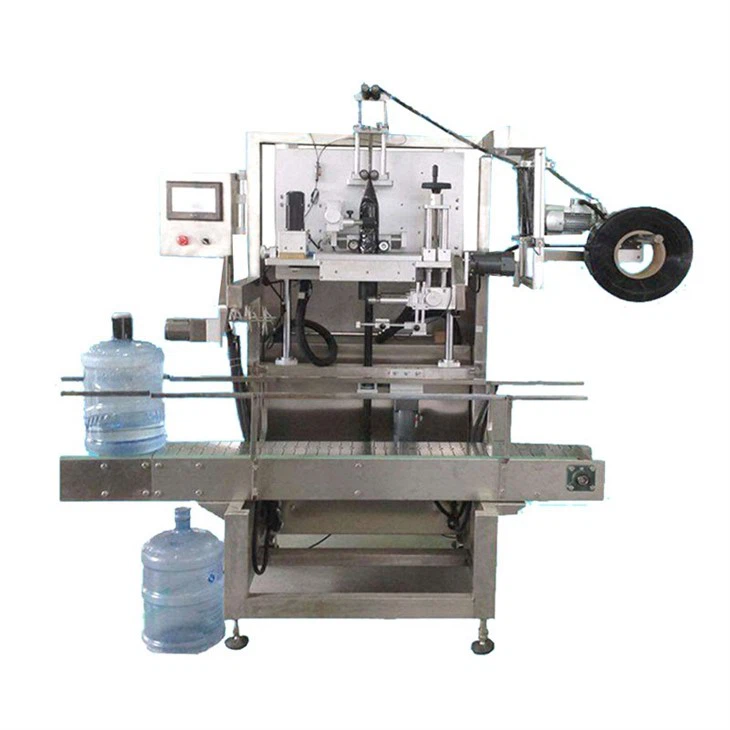
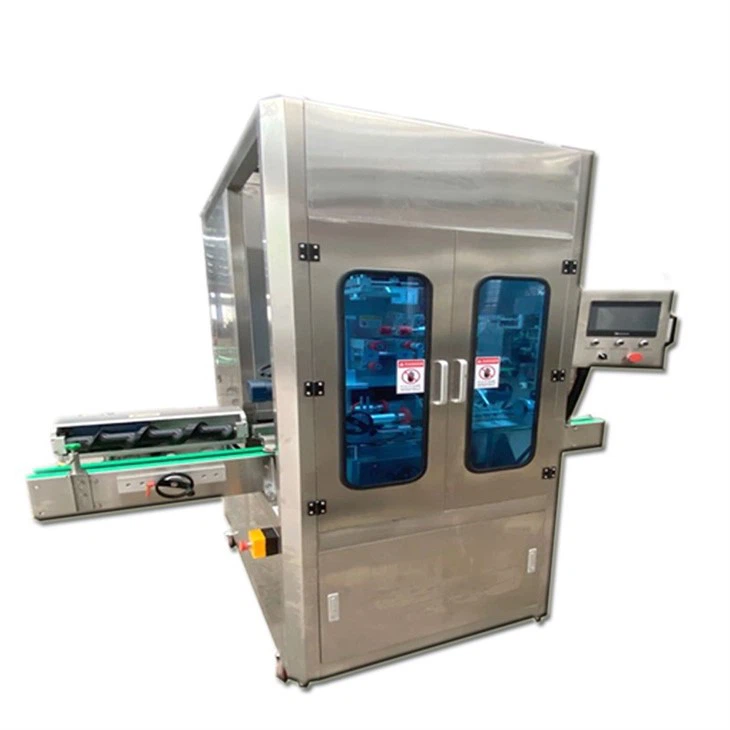
In addition to our laser coding machines, we also offer a range of labeling machines, such as the Large Bucket Water Sleeve Labeling Machine, Fully Automatic Sleeve Labeling Machine, and Double Head Sleeve Labeling Machine. These machines can work in conjunction with our laser coding machines to provide a complete product identification and packaging solution.
Contact Us for Purchase and Consultation
We understand that choosing the right laser coding machine can be a challenging task. That's why our team of experts is here to assist you every step of the way. Whether you need help in selecting the appropriate machine for your application, or you have questions about installation, operation, or maintenance, we are ready to provide you with professional advice and support.
If you are interested in purchasing a laser coding machine or any of our labeling machines, please do not hesitate to contact us. We will be happy to discuss your requirements, provide you with a detailed quotation, and arrange a product demonstration if needed. Investing in the right laser coding machine can significantly enhance the efficiency, quality, and traceability of your production process. Let us help you make the best choice for your business.
References
- O'Shea, D. C., Callen, W. R., & Rhodes, W. T. (2018). Introduction to lasers and their applications. Cambridge University Press.
- Webb, D. J. (2019). Laser materials processing. CRC Press.
- Ready, J. F. (2017). Industrial applications of lasers. Academic Press.