

Hey there! I'm a supplier of sleeve labeling machines, and today I wanna chat about how these nifty machines control the sleeve feeding process. It's a pretty cool topic, and understanding it can help you make better decisions when it comes to buying a labeling machine for your business.
The Basics of Sleeve Feeding
First off, let's get the basics down. Sleeve labeling is a process where a pre-printed plastic sleeve is placed around a container. This sleeve can cover the entire container or just a part of it, and it can have all sorts of graphics, logos, and product information. The sleeve feeding process is all about getting these sleeves from a roll or stack and onto the containers in a precise and efficient way.
Key Components in Sleeve Feeding Control
1. The Roll Holder and Unwinding System
At the start of the sleeve feeding process, we have the roll holder. This is where the roll of sleeve material is placed. The machine needs to unwind the sleeve material at a consistent speed. To do this, it uses a tension control system. Think of it like a fishing reel - you don't want the line to be too loose or too tight. The tension control ensures that the sleeve material unwinds smoothly without any wrinkles or breaks.
For example, if the tension is too high, the sleeve material might tear. On the other hand, if the tension is too low, the sleeve might bunch up or not feed properly. Our Fully Automatic Sleeve Labeling Machine is designed with a top - notch tension control system that keeps the unwinding process on point.
2. Cutting Mechanism
Once the sleeve material is unwound, it needs to be cut into individual sleeves. The cutting mechanism is crucial here. It has to cut the sleeve material accurately to the right length. Most machines use a rotary cutter or a guillotine cutter.
A rotary cutter spins and cuts the material as it passes by. It's great for high - speed operations because it can cut continuously. A guillotine cutter, on the other hand, comes down like a blade to cut the material. It's more suitable for slower, more precise cutting. Our machines are equipped with high - quality cutting mechanisms that can be adjusted depending on the type of sleeve material and the required cutting speed.
3. Picking and Placing the Sleeves
After the sleeves are cut, they need to be picked up and placed on the containers. This is usually done using a pick - and - place system. The system uses suction cups or grippers to pick up the sleeves.
The machine has to know exactly when and where to pick up the sleeve and then place it on the container. It uses sensors and programmable logic controllers (PLCs) to do this. The sensors detect the position of the sleeve and the container, and the PLC sends signals to the pick - and - place system to perform the action. Our Double Head Sleeve Labeling Machine has a super - accurate pick - and - place system that can handle different container shapes and sizes.
Speed and Synchronization
One of the most important aspects of the sleeve feeding process is speed and synchronization. The machine has to feed the sleeves at the right speed to match the speed of the container conveyor. If the sleeve feeding speed is too fast, the sleeves might pile up on the containers. If it's too slow, the containers might pass by without getting labeled.
To achieve this synchronization, the machine uses speed sensors and variable frequency drives (VFDs). The speed sensors measure the speed of the container conveyor, and the VFDs adjust the speed of the sleeve feeding mechanism accordingly. This ensures that each container gets a properly placed sleeve every time.
Quality Control in Sleeve Feeding
Quality control is also a big deal in the sleeve feeding process. The machine has to make sure that the sleeves are fed correctly and that there are no defects. To do this, it uses vision systems.
A vision system is like a pair of eyes for the machine. It can detect things like misaligned sleeves, missing sleeves, or sleeves with printing defects. If a defect is detected, the machine can either reject the container or stop the production line to fix the issue. Our Large Bucket Water Sleeve Labeling Machine is fitted with a state - of - the - art vision system that ensures high - quality labeling every time.
Adjustability for Different Sleeve and Container Sizes
Another great feature of our sleeve labeling machines is their adjustability. You might have different sizes of containers and sleeves for different products. Our machines can be easily adjusted to accommodate these changes.
For example, you can adjust the cutting length to change the size of the sleeves. You can also adjust the pick - and - place system to handle different container shapes, like round, square, or oval. This flexibility makes our machines a great choice for businesses that produce a variety of products.
Conclusion and Call to Action
Well, there you have it - a breakdown of how a sleeve labeling machine controls the sleeve feeding process. It's a complex but fascinating process that involves a lot of technology and precision.

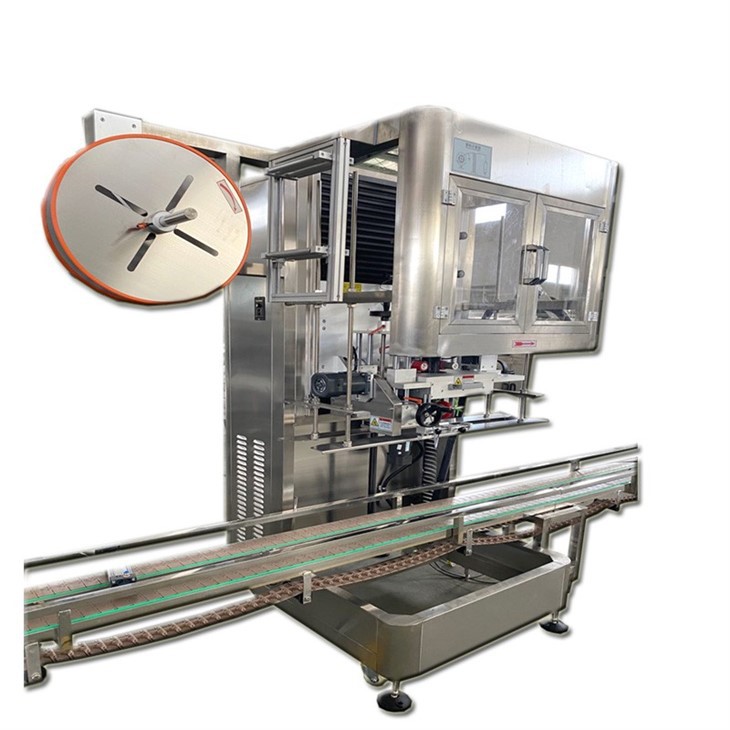
If you're in the market for a sleeve labeling machine, whether it's a Double Head Sleeve Labeling Machine, a Fully Automatic Sleeve Labeling Machine, or a Large Bucket Water Sleeve Labeling Machine, we've got you covered. Our machines are designed with the latest technology to ensure efficient, accurate, and high - quality sleeve labeling.
If you want to learn more or discuss your specific labeling needs, don't hesitate to reach out. We're always happy to have a chat and help you find the perfect machine for your business.
References
- Packaging Machinery Handbook. This handbook provides in - depth knowledge about different types of packaging machinery, including sleeve labeling machines.
- Industry research reports on labeling technology. These reports offer the latest trends and advancements in sleeve labeling machine technology.