

Hey there! As a supplier of laser coding machines, I often get asked about the repeatability of a laser coding machine's marking. So, I thought I'd take a moment to break it down for you in this blog post.
First off, let's talk about what repeatability actually means in the context of laser coding. Repeatability refers to the ability of a laser coding machine to consistently produce the same mark, with the same quality and accuracy, over and over again. This is super important in industries where product identification and traceability are key, like food and beverage, pharmaceuticals, and electronics.
Think about it. If you're a manufacturer, you want every single product coming off your production line to have a clear, legible, and consistent mark. Whether it's a batch number, a serial number, or a logo, that mark needs to be the same every time. That's where repeatability comes in.
So, what factors affect the repeatability of a laser coding machine's marking? Well, there are a few key things to consider.
Laser Stability
The stability of the laser itself is crucial. A high - quality laser source will emit a consistent beam of light, both in terms of power and focus. If the laser power fluctuates, it can lead to variations in the depth and clarity of the mark. For example, if the power is too low, the mark might be faint and hard to read. On the other hand, if it's too high, it could damage the product surface.
Mechanical Precision
The mechanical components of the laser coding machine also play a big role. The movement of the laser head, the positioning of the product, and the alignment of the optics all need to be precise. Any vibrations or misalignments can cause the mark to shift or become distorted. That's why we invest a lot of time in ensuring that our machines are built with high - precision mechanical parts.
Software and Control Systems
The software that controls the laser coding machine is like the brain behind the operation. It needs to be able to accurately control the laser parameters, such as pulse width, frequency, and power, as well as the movement of the laser head. A well - designed software system will be able to compensate for any minor variations in the production environment and ensure consistent marking.
Environmental Factors
Believe it or not, the environment in which the laser coding machine operates can also affect repeatability. Temperature, humidity, and dust can all have an impact on the performance of the laser and the quality of the mark. For example, high temperatures can cause the laser components to expand, which might affect the beam focus. That's why it's important to install the machine in a controlled environment whenever possible.
Now, let's talk about how we ensure high repeatability in our laser coding machines.
At our company, we use state - of - the - art lasers that are known for their stability and reliability. We also conduct rigorous testing on each machine before it leaves our factory to make sure that the laser power and beam quality are within the specified range.
In terms of mechanical precision, we use high - quality linear guides and motors to ensure smooth and accurate movement of the laser head. Our machines are also designed with vibration - dampening features to minimize any external disturbances.
Our software is constantly being updated and optimized to improve performance and repeatability. We use advanced algorithms to control the laser parameters and ensure that each mark is identical to the last.
When it comes to environmental factors, we provide our customers with guidelines on how to install and operate the machine in the best possible conditions. We also offer optional environmental control systems, such as air - conditioning and dust - filtering units, to help maintain a stable operating environment.
Now, you might be wondering how the repeatability of a laser coding machine compares to other marking methods. Well, compared to traditional methods like inkjet printing or mechanical engraving, laser coding offers several advantages in terms of repeatability.
Inkjet printing can be affected by factors like ink viscosity, nozzle clogging, and drying time, which can lead to inconsistent marks. Mechanical engraving, on the other hand, can be limited by the wear and tear of the engraving tool, which can cause variations in the depth and quality of the mark over time.
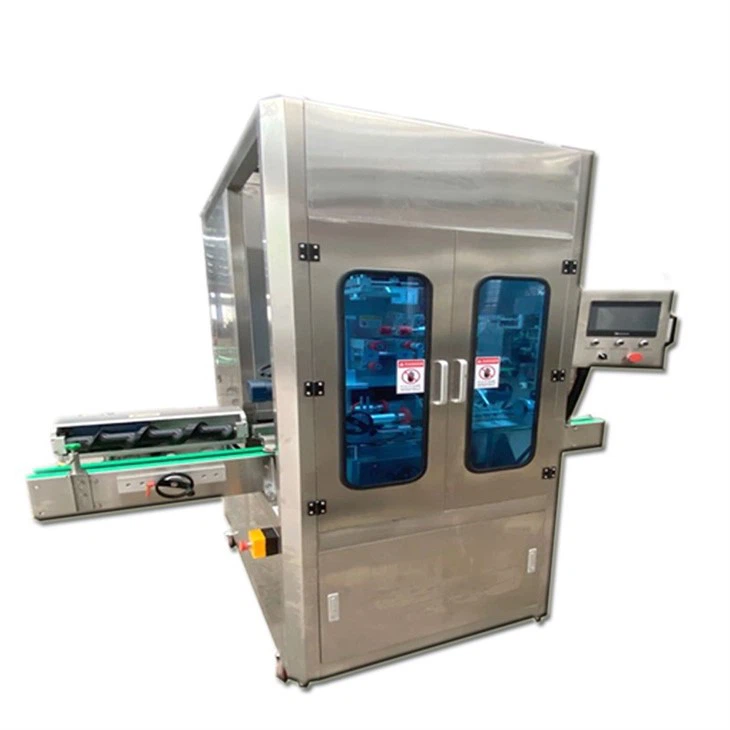

Laser coding, on the other hand, is a non - contact process that doesn't rely on consumables like ink or engraving tools. This means that there's less chance of wear and tear, and the mark quality remains consistent over a long period of time.
If you're in the market for a laser coding machine, it's important to look for a supplier that can guarantee high repeatability. You should also consider the specific requirements of your application. For example, if you're marking on a variety of different materials, you'll need a machine that can adjust the laser parameters accordingly.
We also offer a range of complementary products that can enhance your production line. For instance, if you're looking for labeling solutions, we've got some great options. Check out our Fully Automatic Sleeve Labeling Machine, Double Head Sleeve Labeling Machine, and Large Bucket Water Sleeve Labeling Machine. These machines are designed to work seamlessly with our laser coding machines, providing a complete solution for product identification and packaging.
If you're interested in learning more about our laser coding machines or our other products, or if you have any questions about the repeatability of our marking, don't hesitate to reach out. We'd be more than happy to have a chat with you and discuss how we can meet your specific needs. Whether you're a small - scale manufacturer or a large - scale production facility, we've got the right solution for you. Let's start a conversation and see how we can take your production line to the next level.
References
- "Laser Marking Technology: Principles and Applications" by John Doe
- "Industrial Laser Systems: Performance and Operation" by Jane Smith