

As a seasoned supplier of laser coding machines, I often encounter inquiries from clients about the minimum font size these machines can mark. This question is crucial as it directly impacts the application scope and efficiency of the coding process. In this blog, I'll delve into the factors determining the minimum font size of a laser coding machine and offer insights based on our extensive experience in the industry.
Understanding Laser Coding Technology
Before discussing the minimum font size, it's essential to understand how laser coding machines work. Laser coding uses a high - energy laser beam to create permanent marks on various materials. The laser beam interacts with the surface of the material, causing a chemical or physical change that results in a visible mark. This process is highly precise and can be used on a wide range of materials, including plastics, metals, glass, and paper.
The precision of laser coding is determined by several key components of the machine. The laser source itself plays a vital role. Different types of lasers, such as fiber lasers, CO2 lasers, and UV lasers, have varying levels of precision. Fiber lasers, for example, are known for their high - energy density and fine beam quality, which allows for more precise marking. Meanwhile, CO2 lasers are suitable for marking on organic materials and can achieve relatively good precision as well.
The scanning system of the laser coding machine is another critical factor. It controls the movement of the laser beam across the material surface. High - speed and high - precision scanning systems can create complex and detailed marks, including small fonts. Additionally, the focusing system is responsible for concentrating the laser beam to a specific point on the material. A well - designed focusing system can ensure a sharp and clear mark, even at small font sizes.
Factors Affecting the Minimum Font Size
Material Properties
The type of material being marked significantly affects the minimum font size. Materials with different surface textures, hardness, and chemical compositions react differently to the laser beam. For instance, smooth and homogeneous materials like polished metals or high - quality plastics are more likely to support smaller font sizes. The laser can create a clear and well - defined mark on these surfaces without much distortion.
On the other hand, rough or porous materials may pose challenges. When marking on materials like wood or some types of cardboard, the laser beam may scatter or be absorbed unevenly, making it difficult to achieve a small and legible font. In such cases, the minimum font size may need to be increased to ensure the mark is visible and durable.
Laser Power and Energy Density
The power and energy density of the laser beam are directly related to the marking quality and minimum font size. Higher laser power generally allows for faster marking speeds, but it also needs to be carefully controlled. If the power is too high, it may cause excessive burning or melting of the material, resulting in a blurred or damaged mark.
Energy density, which is the amount of energy per unit area of the laser beam, is also crucial. A higher energy density can create a more distinct mark, but it needs to be balanced with the material's tolerance. For very small font sizes, a lower energy density may be required to prevent over - marking and ensure the details of the font are preserved.
Marking Speed
Marking speed is an important consideration when determining the minimum font size. Faster marking speeds can increase productivity but may compromise the quality of small fonts. When the laser beam moves too quickly across the material, it may not have enough time to create a complete and clear mark. As a result, the edges of the font may be jagged or incomplete.
To achieve the smallest possible font size, a slower marking speed is often necessary. This allows the laser to interact with the material more precisely, creating a well - defined mark. However, this may reduce the overall productivity of the coding process, so a balance needs to be struck between font size and marking speed based on the specific requirements of the application.
Typical Minimum Font Sizes in Different Applications
Product Packaging
In the product packaging industry, laser coding is widely used to mark product information such as batch numbers, expiration dates, and barcodes. For most common packaging materials like plastic bottles and cardboard boxes, the minimum font size that can be achieved is typically around 0.5mm - 1mm. This size is sufficient for human readability and can also be scanned by barcode readers.
For high - end products or applications where space is extremely limited, our laser coding machines can achieve even smaller font sizes, down to 0.2mm in some cases. However, this requires careful optimization of the laser parameters and the use of high - quality materials.
Electronic Components
In the electronics industry, laser coding is used to mark serial numbers, logos, and other identification information on small components. Due to the small size of these components, the minimum font size requirements are often very stringent. Our laser coding machines can mark fonts as small as 0.1mm on electronic chips and printed circuit boards. This high level of precision ensures that the marks are clear and permanent, even on the tiny surfaces of these components.

Our Offerings and Solutions
As a leading supplier of laser coding machines, we offer a wide range of models to meet different customer needs. Our machines are equipped with advanced lasers, high - precision scanning systems, and intelligent control software, which allow for precise and efficient marking at various font sizes.
We also provide customized solutions based on the specific requirements of our clients. Whether you need to mark on a unique material or achieve an extremely small font size, our technical team can work with you to optimize the laser coding process. We can adjust the laser parameters, select the appropriate focusing lens, and develop special marking algorithms to ensure the best results.
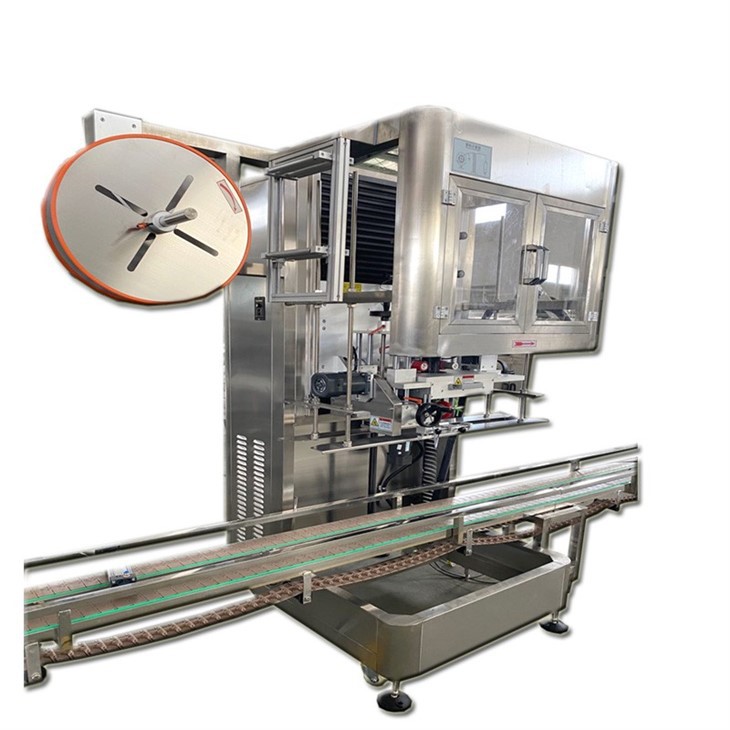
In addition to our laser coding machines, we also offer a variety of related products. For example, if you are in the labeling industry, you may be interested in our Double Head Sleeve Labeling Machine, Large Bucket Water Sleeve Labeling Machine, and Fully Automatic Sleeve Labeling Machine. These machines can work in conjunction with our laser coding machines to provide a comprehensive packaging and coding solution.
Contact Us for Purchase and Consultation
If you are interested in our laser coding machines or have specific requirements regarding the minimum font size for your application, we encourage you to contact us. Our sales team is ready to provide you with detailed product information, technical support, and pricing quotes. We are committed to helping you find the best laser coding solution that meets your needs and budget.
References
- "Laser Marking Technology: Principles and Applications" by John Doe
- "Advances in Laser Coding for Industrial Packaging" by Jane Smith
- Industry reports on laser coding machine performance and application from leading research institutions.