

Hey there! As a supplier of laser coding machines, I often get asked about the minimum character size these machines can mark. It's a super important question, especially for businesses looking to pack a lot of information into a small space or those aiming for ultra - precise markings.
Let's first understand what laser coding machines are all about. These machines use lasers to create permanent marks on various materials. They're pretty versatile and can work on stuff like plastics, metals, glass, and even some types of wood. The way they work is by heating up the surface of the material, which either changes its color or removes a thin layer, creating a visible mark.
Now, when it comes to the minimum character size, it depends on several factors. The first one is the type of laser being used. There are different kinds, like fiber lasers, CO2 lasers, and UV lasers. Each has its own unique properties that affect the marking capabilities.
Fiber lasers are known for their high - energy density and precision. They can create really small and sharp marks. In many cases, a fiber laser coding machine can mark characters as small as 0.1mm to 0.2mm. That's incredibly tiny! You could fit a whole bunch of letters in a space no bigger than the tip of a pencil. These lasers are great for applications where you need to mark serial numbers, barcodes, or other small - scale information on things like electronic components or medical devices.
CO2 lasers, on the other hand, are more commonly used for marking on organic materials such as wood, paper, and some plastics. They're not quite as precise as fiber lasers when it comes to super - small character sizes. Generally, the minimum character size for a CO2 laser coding machine is around 0.5mm to 1mm. While this might seem a bit larger compared to fiber lasers, it's still small enough for a lot of industrial and commercial uses. For example, if you're marking product labels or packaging, a 0.5mm - 1mm character size can be more than sufficient to display important details like expiration dates or batch numbers.
UV lasers are relatively new in the game but are gaining popularity fast. They have a shorter wavelength, which allows them to create very fine and high - contrast marks. A UV laser coding machine can typically mark characters as small as 0.05mm to 0.1mm. This makes them ideal for applications where you need extremely detailed markings, such as on microchips or high - end jewelry.
Another factor that affects the minimum character size is the material being marked. Different materials have different physical and chemical properties, which can influence how well the laser can create a visible mark. For instance, a smooth and homogeneous material like stainless steel will generally allow for smaller character sizes compared to a rough or porous material like concrete. When marking on a rough surface, the laser might have a harder time creating a clear and consistent mark, so you may need to go with a slightly larger character size.
The power of the laser also plays a role. A higher - power laser can heat up the material more quickly and effectively, which can sometimes enable smaller character sizes. However, it's a delicate balance. If the power is too high, it can cause damage to the material, such as melting or charring. So, you need to find the right power setting for the specific material and the desired character size.
The speed of the marking process is yet another consideration. If you're trying to mark a large number of products quickly, you might need to increase the character size slightly. This is because a smaller character size requires more precise control and slower movement of the laser beam. So, if you're in a high - volume production environment, you'll need to find a sweet spot between speed and character size to ensure both efficiency and quality.
Now, let's talk about some real - world applications. In the electronics industry, where space is at a premium, the ability to mark very small characters is crucial. Manufacturers of smartphones, tablets, and other electronic devices use laser coding machines to mark serial numbers, model numbers, and other important information on the tiny components inside. A fiber or UV laser coding machine with its ability to create extremely small characters is the perfect tool for this job.
In the food and beverage industry, product labels need to display a lot of information, including ingredients, nutritional facts, and expiration dates. While the character size doesn't need to be as small as in the electronics industry, a CO2 laser coding machine can still provide clear and legible markings on the packaging. And for high - end food products or luxury beverages, a small and elegant mark can add a touch of sophistication.
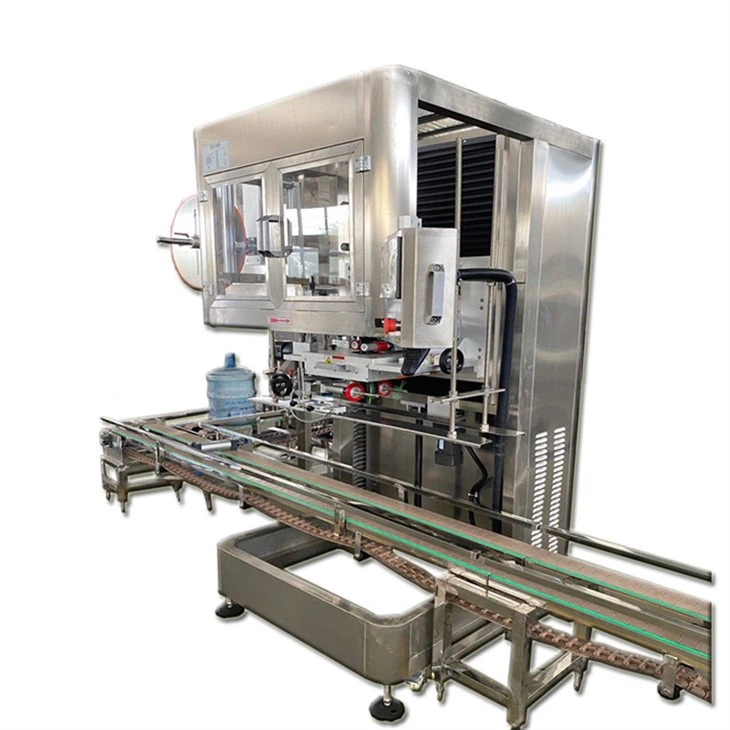
If you're in the business of labeling products, you might also be interested in our range of labeling machines. We offer a Fully Automatic Sleeve Labeling Machine that can handle the labeling process with high efficiency and precision. It's a great addition to any production line. We also have a Double Head Sleeve Labeling Machine which can double your labeling speed, and a Large Bucket Water Sleeve Labeling Machine specifically designed for large - volume water packaging.
If you're thinking about upgrading your marking or labeling equipment, or if you have any questions about the minimum character size of our laser coding machines, don't hesitate to reach out. We're here to help you find the best solution for your business needs. Whether you're a small - scale producer or a large - scale manufacturer, we've got the right equipment and expertise to meet your requirements. So, let's start a conversation and see how we can work together to take your production to the next level.
References

- Laser Marking Handbook: A Comprehensive Guide to Laser Marking Technologies and Applications
- Industrial Laser Technology: Principles and Practices for Manufacturing