

In today's industrial landscape, energy efficiency is not just a buzzword; it's a critical factor for businesses aiming to reduce operational costs and minimize their environmental footprint. As a leading supplier of sleeve labeling machines, we understand the importance of optimizing energy consumption in these machines. This blog post will explore various strategies and techniques to achieve this goal.
Understanding the Energy Consumption of Sleeve Labeling Machines
Before we delve into optimization strategies, it's essential to understand how sleeve labeling machines consume energy. These machines typically have several energy-consuming components, including motors, heaters, and control systems.
Motors are used to drive the conveyor belts, rotate the labeling heads, and perform other mechanical movements. The power consumption of motors depends on their size, speed, and load. Heaters are used to shrink the sleeve labels onto the products, and their energy consumption is determined by the heating temperature and duration. Control systems, such as programmable logic controllers (PLCs), monitor and regulate the operation of the machine, consuming a relatively small amount of energy.
Strategies for Optimizing Energy Consumption
1. Selecting Energy-Efficient Components
One of the most effective ways to optimize energy consumption is to choose energy-efficient components when designing and manufacturing sleeve labeling machines. For example, high-efficiency motors can significantly reduce power consumption compared to standard motors. These motors are designed to convert a higher percentage of electrical energy into mechanical energy, resulting in less wasted energy.
Similarly, using energy-efficient heaters can also save energy. Infrared heaters, for instance, are more efficient than traditional electric heaters because they transfer heat directly to the sleeve labels, reducing heat loss to the surrounding environment.
2. Implementing Variable Speed Drives
Variable speed drives (VSDs) can be used to control the speed of motors in sleeve labeling machines. By adjusting the motor speed according to the actual load requirements, VSDs can reduce energy consumption. For example, when the machine is operating at a lower production rate, the motor speed can be decreased, resulting in lower power consumption.
3. Optimizing Heating Systems
Heating is one of the most energy-intensive processes in sleeve labeling machines. To optimize energy consumption, it's important to ensure that the heating system is operating at the right temperature and for the right duration. This can be achieved by using temperature sensors and controllers to monitor and adjust the heating process in real-time.
In addition, insulating the heating chambers can reduce heat loss and improve energy efficiency. Insulation materials such as fiberglass or ceramic fiber can be used to line the walls of the heating chambers, preventing heat from escaping into the surrounding environment.
4. Improving Machine Design
The design of the sleeve labeling machine can also have a significant impact on energy consumption. For example, a well-designed conveyor system can reduce the energy required to move the products through the machine. By minimizing friction and using smooth surfaces, the conveyor system can operate more efficiently, resulting in lower power consumption.
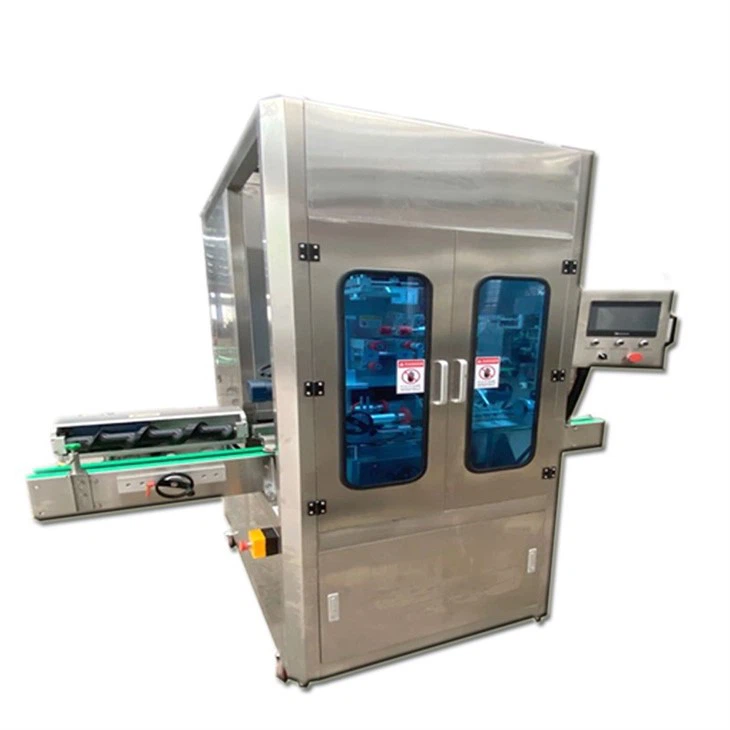

Another aspect of machine design is the layout of the components. By arranging the motors, heaters, and other components in a way that minimizes the length of electrical and pneumatic connections, the energy loss due to resistance and pressure drop can be reduced.
5. Implementing Energy Management Systems
Energy management systems (EMS) can be used to monitor and control the energy consumption of sleeve labeling machines. These systems can collect data on energy usage, identify areas of high energy consumption, and provide recommendations for optimization.
For example, an EMS can monitor the power consumption of each motor and heater in the machine and generate reports on energy usage over time. Based on this data, the system can suggest adjustments to the operating parameters of the machine, such as reducing the motor speed or adjusting the heating temperature, to save energy.
Case Studies
To illustrate the effectiveness of these optimization strategies, let's look at some case studies of sleeve labeling machines that have achieved significant energy savings.
Case Study 1: Double Head Sleeve Labeling Machine
A manufacturer of Double Head Sleeve Labeling Machine implemented several energy optimization measures, including using high-efficiency motors, variable speed drives, and an energy management system. As a result, the machine's energy consumption was reduced by 20% compared to the previous model.
Case Study 2: Fully Automatic Sleeve Labeling Machine
Another company that produces Fully Automatic Sleeve Labeling Machine optimized its heating system by using infrared heaters and insulating the heating chambers. This led to a 15% reduction in energy consumption and improved the quality of the sleeve labels.
Case Study 3: Large Bucket Water Sleeve Labeling Machine
A manufacturer of Large Bucket Water Sleeve Labeling Machine implemented variable speed drives on its motors and optimized the conveyor system design. These measures resulted in a 18% reduction in energy consumption and increased the machine's overall efficiency.
Conclusion
Optimizing the energy consumption of sleeve labeling machines is not only beneficial for the environment but also for the bottom line of businesses. By implementing the strategies discussed in this blog post, such as selecting energy-efficient components, implementing variable speed drives, optimizing heating systems, improving machine design, and using energy management systems, significant energy savings can be achieved.
As a sleeve labeling machine supplier, we are committed to providing our customers with energy-efficient solutions that help them reduce their operational costs and environmental impact. If you are interested in learning more about our energy-efficient sleeve labeling machines or would like to discuss your specific requirements, please feel free to contact us for a procurement consultation. We look forward to working with you to achieve your energy optimization goals.
References
- "Energy Efficiency in Industrial Motors," International Energy Agency.
- "Optimizing Heating Systems for Industrial Processes," ASME.
- "Variable Speed Drives: Principles and Applications," IEEE.