

Hey there! As a laser coding machine supplier, I often get asked how our machines ensure the consistency of code quality. Well, let me break it down for you.
First off, let's talk about the technology behind laser coding machines. These bad boys use high - energy laser beams to create permanent marks on various materials. The key to consistent code quality lies in several aspects of the machine's design and operation.
Precise Laser Control
One of the most important factors is the precise control of the laser beam. Our laser coding machines are equipped with advanced control systems that can accurately regulate the power, frequency, and duration of the laser pulses. This means that every time the machine creates a code, the laser is delivering the exact same amount of energy to the material.
For example, if we're coding on a plastic surface, we need to make sure the laser power is just right. Too much power, and the plastic might melt or char, creating a messy and inconsistent code. Too little power, and the code might be faint or incomplete. Our control systems are calibrated to maintain the optimal settings for different materials, ensuring that the code quality remains top - notch across the board.
High - Resolution Scanning
Another crucial element is the scanning system. Our machines use high - resolution galvanometer scanners to move the laser beam across the surface of the material. These scanners can move at incredibly high speeds and with extreme precision. They're like little robotic artists, carefully tracing out each character of the code.
The high - resolution scanning allows us to create codes with sharp edges and clear details. Whether it's a simple serial number or a complex logo, the scanner can reproduce it accurately every time. This consistency is essential, especially for industries where product identification and traceability are critical, such as pharmaceuticals and electronics.
Material Compatibility and Testing
We understand that different materials react differently to laser coding. That's why we've spent a lot of time researching and testing our machines on a wide range of materials. Before we recommend a laser coding machine to a customer, we conduct thorough material compatibility tests.
We test the machine on samples of the customer's specific material to ensure that the code quality meets their requirements. This includes checking for factors like contrast, readability, and durability. If there are any issues, we can adjust the machine's settings or recommend a different type of laser source to achieve the best results.
Software and Database Management
Our laser coding machines are also integrated with powerful software systems. The software allows us to store and manage a database of codes and templates. Customers can easily select the code they want to print, adjust the size and orientation, and even add variable data such as batch numbers or expiration dates.
The software also has built - in quality control features. It can check the code for errors before it's printed, such as missing characters or incorrect formatting. This helps to prevent costly mistakes and ensures that every code is consistent and accurate.
Regular Maintenance and Calibration
Just like any other piece of equipment, laser coding machines need regular maintenance and calibration to keep them performing at their best. We provide our customers with detailed maintenance schedules and instructions to ensure that their machines are always in top condition.
Regular maintenance includes cleaning the laser optics, checking the cooling system, and inspecting the electrical components. Calibration is also essential to ensure that the laser beam is hitting the right spot and that the code dimensions are accurate. By following these maintenance and calibration procedures, customers can ensure that their machines continue to produce consistent code quality over time.
Comparison with Other Coding Methods
When compared to other coding methods, such as inkjet printing or mechanical engraving, laser coding has several advantages in terms of code quality consistency. Inkjet printers can be affected by factors like ink viscosity, nozzle clogging, and environmental conditions, which can lead to inconsistent code quality. Mechanical engraving, on the other hand, can be limited in terms of the complexity of the codes that can be created and may also cause wear and tear on the engraving tools.
Laser coding, on the other hand, is a non - contact process that doesn't rely on consumables like ink. This means that there are fewer variables that can affect the code quality. The laser beam is a stable and reliable source of energy, and as long as the machine is properly maintained and calibrated, it can produce consistent codes day in and day out.
Industry Applications
The consistent code quality provided by our laser coding machines makes them suitable for a wide range of industries. In the food and beverage industry, for example, clear and consistent codes are necessary for product labeling and expiration date marking. Consumers need to be able to easily read the information on the product, and manufacturers need to ensure that the codes are durable enough to withstand the rigors of the supply chain.

In the automotive industry, laser coding is used for part identification and traceability. The codes need to be accurate and consistent to ensure that parts can be easily tracked throughout the manufacturing and assembly process. Our machines can create codes on a variety of automotive components, including engine parts, chassis, and electrical systems.
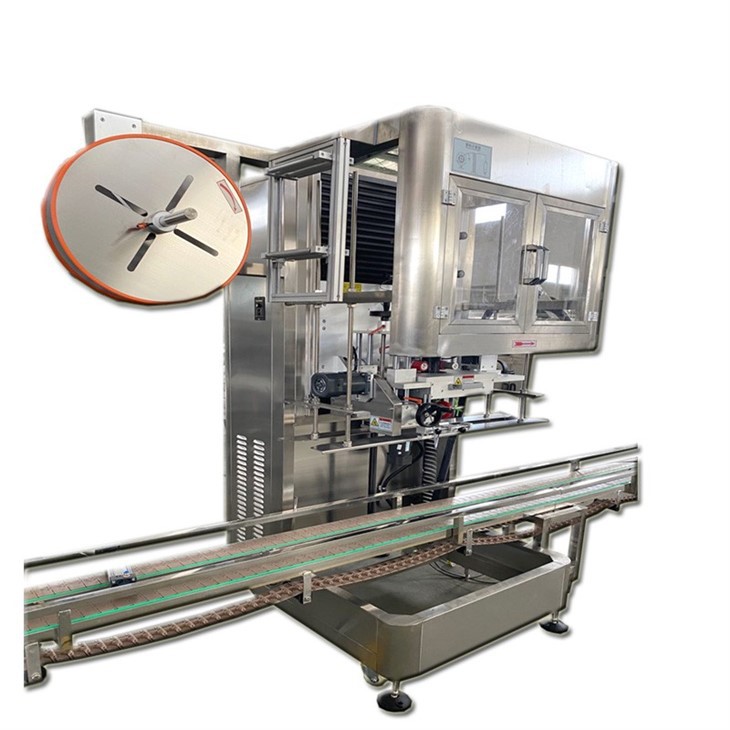
And if you're in the packaging industry, you might be interested in our related products like the Double Head Sleeve Labeling Machine, Fully Automatic Sleeve Labeling Machine, and Large Bucket Water Sleeve Labeling Machine. These machines can work in tandem with our laser coding machines to provide a complete product identification and packaging solution.
Conclusion
In conclusion, ensuring the consistency of code quality in laser coding machines is a multi - faceted process. It involves precise laser control, high - resolution scanning, material compatibility testing, software management, and regular maintenance. Our team of experts is constantly working to improve these aspects of our machines to provide the best possible code quality for our customers.
If you're in the market for a laser coding machine and want to ensure that you get consistent code quality, don't hesitate to reach out to us. We're here to help you find the perfect solution for your specific needs. Whether you're a small business looking for a simple coding solution or a large corporation with complex requirements, we've got you covered. Let's start a conversation about how our laser coding machines can take your product identification to the next level.
References
- Laser Coding Technology Handbook
- Industry Research Reports on Product Identification and Coding