

Can a Sleeve Labeling Machine Work with Different Sleeve Thicknesses?
As a leading supplier of sleeve labeling machines, I often encounter inquiries from customers about the machine's compatibility with different sleeve thicknesses. This is a crucial question, as the ability to handle various sleeve thicknesses can significantly impact the efficiency and flexibility of the labeling process. In this blog post, I will delve into this topic, exploring the factors that affect a sleeve labeling machine's performance with different sleeve thicknesses and providing insights on how our machines are designed to address these challenges.
Understanding Sleeve Thickness and Its Impact on Labeling
Sleeve labels are commonly used in the packaging industry due to their versatility, high-quality graphics, and ability to conform to various container shapes. The thickness of a sleeve label can vary depending on several factors, including the material used, the intended application, and the desired level of durability. Thicker sleeves are often used for products that require more protection or for labels with intricate designs, while thinner sleeves are suitable for applications where cost is a primary concern or where a more lightweight label is desired.
The thickness of the sleeve label can have a significant impact on the labeling process. Thicker sleeves may require more force to dispense and apply, which can put additional stress on the labeling machine's components. They may also be more prone to wrinkling or misalignment during the application process, which can result in a poor-quality label finish. On the other hand, thinner sleeves may be more difficult to handle, as they are more delicate and can easily tear or jam in the machine.
Factors Affecting a Sleeve Labeling Machine's Compatibility with Different Sleeve Thicknesses
Several factors determine a sleeve labeling machine's ability to work with different sleeve thicknesses. These include the machine's design, the type of labeling technology used, and the level of adjustability and flexibility built into the machine.
- Machine Design: The design of the sleeve labeling machine plays a crucial role in its ability to handle different sleeve thicknesses. A well-designed machine will have a robust and reliable mechanism for dispensing, cutting, and applying the sleeve labels. It will also have adjustable components that can be easily modified to accommodate different sleeve thicknesses. For example, the tension control system should be able to adjust the amount of force applied to the sleeve label during the dispensing process, ensuring that it is dispensed smoothly and evenly regardless of its thickness.
- Labeling Technology: There are several different types of labeling technologies available, each with its own advantages and limitations when it comes to handling different sleeve thicknesses. Some of the most common labeling technologies used in sleeve labeling machines include hot air shrink labeling, steam shrink labeling, and cold shrink labeling. Hot air shrink labeling is a popular choice for thicker sleeves, as it provides a strong and durable bond between the label and the container. Steam shrink labeling is often used for thinner sleeves, as it is a more gentle and precise method of applying the label. Cold shrink labeling is a relatively new technology that uses a special adhesive to bond the label to the container without the need for heat. This technology is suitable for a wide range of sleeve thicknesses and is particularly useful for applications where heat-sensitive products are being labeled.
- Adjustability and Flexibility: A sleeve labeling machine that is highly adjustable and flexible will be better able to handle different sleeve thicknesses. This includes the ability to adjust the speed of the machine, the tension of the sleeve label, the cutting length, and the position of the label on the container. Some machines also have the ability to automatically detect the thickness of the sleeve label and adjust the settings accordingly, ensuring that the labeling process is optimized for each specific application.
Our Sleeve Labeling Machines: Designed for Versatility and Performance
At our company, we understand the importance of providing our customers with sleeve labeling machines that are capable of working with different sleeve thicknesses. That's why we have designed our machines with a focus on versatility, performance, and ease of use.
Our Fully Automatic Sleeve Labeling Machine is a state-of-the-art machine that is capable of handling a wide range of sleeve thicknesses. It features a robust and reliable design, with adjustable components that can be easily modified to accommodate different sleeve thicknesses. The machine also uses advanced labeling technology, such as hot air shrink labeling, to ensure a strong and durable bond between the label and the container. With its high-speed operation and precise labeling capabilities, our fully automatic sleeve labeling machine is ideal for large-scale production environments.
In addition to our fully automatic sleeve labeling machine, we also offer a Large Bucket Water Sleeve Labeling Machine that is specifically designed for labeling large buckets of water. This machine is capable of handling thicker sleeve labels, which are often used for this type of application. It features a heavy-duty construction and a powerful motor, ensuring that it can handle the high volume of labeling required in the water bottling industry.

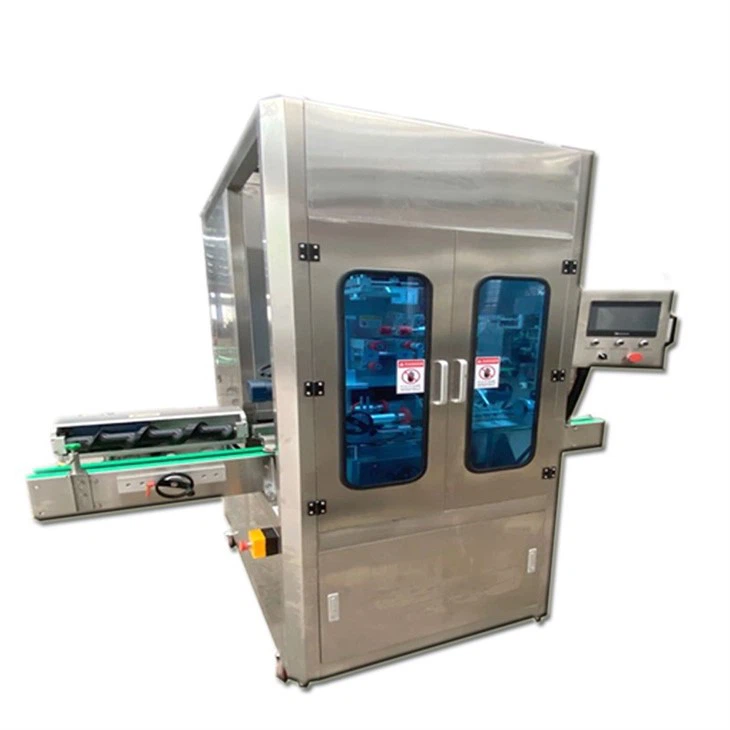
We also offer a Double Head Sleeve Labeling Machine that is designed for high-speed labeling applications. This machine features two labeling heads, which allows it to label two containers simultaneously, increasing the production efficiency. The double head sleeve labeling machine is capable of handling different sleeve thicknesses and can be easily adjusted to accommodate different container sizes and shapes.
Tips for Using a Sleeve Labeling Machine with Different Sleeve Thicknesses
If you are using a sleeve labeling machine to label products with different sleeve thicknesses, there are several tips that you can follow to ensure a successful labeling process.
- Test the Machine: Before using the machine with a new sleeve thickness, it is important to conduct a test run to ensure that the machine is set up correctly and that the labeling process is working properly. This will allow you to make any necessary adjustments to the machine's settings and ensure that the labels are being applied accurately and consistently.
- Use the Right Labeling Technology: As mentioned earlier, different labeling technologies are better suited for different sleeve thicknesses. Make sure that you are using the right labeling technology for the sleeve thickness that you are working with to ensure a high-quality label finish.
- Adjust the Machine Settings: Most sleeve labeling machines have adjustable settings that can be modified to accommodate different sleeve thicknesses. Make sure that you are adjusting the machine's settings, such as the tension control, cutting length, and label position, to ensure that the labels are being applied correctly.
- Maintain the Machine: Regular maintenance of the sleeve labeling machine is essential to ensure its optimal performance. This includes cleaning the machine, lubricating the moving parts, and replacing any worn or damaged components. By maintaining the machine properly, you can extend its lifespan and ensure that it continues to work effectively with different sleeve thicknesses.
Conclusion
In conclusion, a sleeve labeling machine can work with different sleeve thicknesses, but it requires a machine that is designed for versatility and performance. At our company, we offer a range of sleeve labeling machines that are capable of handling a wide range of sleeve thicknesses, from thin and delicate labels to thick and durable labels. Our machines are designed with adjustable components, advanced labeling technology, and a focus on ease of use, ensuring that they can be easily modified to accommodate different sleeve thicknesses and provide a high-quality label finish.
If you are interested in learning more about our sleeve labeling machines or would like to discuss your specific labeling requirements, please do not hesitate to contact us. Our team of experts will be happy to assist you and provide you with the information and support that you need to make an informed decision.
References
- Packaging Machinery Manufacturers Institute (PMMI). (n.d.). Sleeve Labeling Technology. Retrieved from [PMMI Website]
- Labeling Machine Manufacturers Association (LMMA). (n.d.). Guide to Sleeve Labeling. Retrieved from [LMMA Website]
- Smith, J. (2019). The Impact of Sleeve Thickness on Labeling Performance. Journal of Packaging Technology, 25(3), 45-52.