

Labeling machines are crucial pieces of equipment in various industries, from food and beverage to pharmaceuticals and cosmetics. The speed at which a labeling machine operates can significantly impact production efficiency, product quality, and overall business profitability. As a leading labeling machine supplier, we understand the importance of effective labeling speed control methods. In this blog post, we will explore the different labeling speed control methods, their advantages, and how they can be optimized for your specific production needs.
Understanding Labeling Speed
Before delving into the control methods, it's essential to understand what labeling speed means. Labeling speed refers to the number of labels that a machine can apply within a given time frame, usually measured in labels per minute (LPM). The ideal labeling speed depends on several factors, including the type of product, label size and complexity, production volume requirements, and the overall production line speed.
Common Labeling Speed Control Methods
1. Manual Speed Adjustment
Manual speed adjustment is the simplest and most straightforward method of controlling the labeling speed. In this method, operators use a control panel or a mechanical dial to set the desired speed. This approach is suitable for small-scale production or when the production requirements are relatively stable.
Advantages:
- Low cost: Manual speed adjustment does not require complex electronic components or software, making it an affordable option for small businesses.
- Easy to operate: Operators can quickly learn how to adjust the speed using a simple control panel or dial.
Disadvantages:
- Limited precision: Manual adjustments are prone to human error, which can result in inconsistent labeling speeds and potentially affect product quality.
- Lack of flexibility: Once the speed is set, it cannot be easily changed without manual intervention, which may not be suitable for dynamic production environments.
2. Variable Frequency Drive (VFD)
A Variable Frequency Drive is an electronic device that controls the speed of an electric motor by adjusting the frequency and voltage of the power supply. In labeling machines, VFDs are commonly used to control the speed of the conveyor belt, label dispenser, and other moving parts.
Advantages:
- Precise speed control: VFDs offer high precision in speed adjustment, allowing for accurate and consistent labeling speeds.
- Energy efficiency: By adjusting the motor speed according to the actual production requirements, VFDs can reduce energy consumption and lower operating costs.
- Soft start and stop: VFDs provide a smooth start and stop function, which can reduce mechanical stress on the machine and extend its lifespan.
Disadvantages:
- Higher cost: VFDs are more expensive than manual speed adjustment methods, which may be a significant investment for small businesses.
- Complex installation and maintenance: VFDs require professional installation and maintenance, which may add to the overall cost of ownership.
3. Programmable Logic Controller (PLC)
A Programmable Logic Controller is a digital computer used for automation of industrial processes, including labeling machines. PLCs can be programmed to control various aspects of the labeling process, including speed, label placement, and synchronization with other production line equipment.
Advantages:
- High flexibility: PLCs can be easily programmed to adapt to different production requirements, making them suitable for a wide range of applications.
- Precise control: PLCs offer precise control over the labeling process, ensuring consistent quality and accuracy.
- Integration with other systems: PLCs can be integrated with other production line equipment, such as sensors, conveyors, and printers, to create a fully automated labeling system.
Disadvantages:

- Higher cost: PLCs are more expensive than manual speed adjustment methods and require specialized programming skills.
- Complex programming: Programming a PLC requires technical expertise, which may be a challenge for some operators.
4. Servo Motor Control
Servo motors are high-precision motors that can be controlled with great accuracy. In labeling machines, servo motors are used to control the movement of the label dispenser, applicator, and other critical components.
Advantages:
- High precision: Servo motors offer extremely high precision in speed and position control, ensuring accurate label placement and consistent labeling quality.
- Fast response time: Servo motors can quickly adjust their speed and position in response to changes in the production process, making them suitable for high-speed labeling applications.
- Torque control: Servo motors can provide constant torque at different speeds, which is essential for maintaining consistent labeling pressure.
Disadvantages:
- Higher cost: Servo motors are more expensive than other types of motors, which may increase the overall cost of the labeling machine.
- Complex control system: Servo motors require a sophisticated control system, which may require professional installation and maintenance.
Optimizing Labeling Speed Control
To achieve the optimal labeling speed for your production line, it's important to consider the following factors:
1. Product and Label Characteristics
The type of product and label being used can have a significant impact on the labeling speed. For example, products with irregular shapes or surfaces may require slower labeling speeds to ensure accurate label placement. Similarly, large or complex labels may take longer to apply than small, simple labels.
2. Production Volume Requirements
The production volume requirements will determine the minimum labeling speed needed to meet the production targets. It's important to choose a labeling speed control method that can handle the required production volume without compromising on quality.
3. Integration with Other Production Line Equipment
The labeling machine should be integrated seamlessly with other production line equipment, such as conveyors, fillers, and cappers. This will ensure smooth and efficient production flow and prevent bottlenecks.
4. Operator Training and Support
Proper operator training is essential for maximizing the performance of the labeling machine. Operators should be trained on how to use the speed control system effectively and troubleshoot common issues. Additionally, ongoing technical support should be available to address any problems that may arise.
Our Labeling Machine Solutions
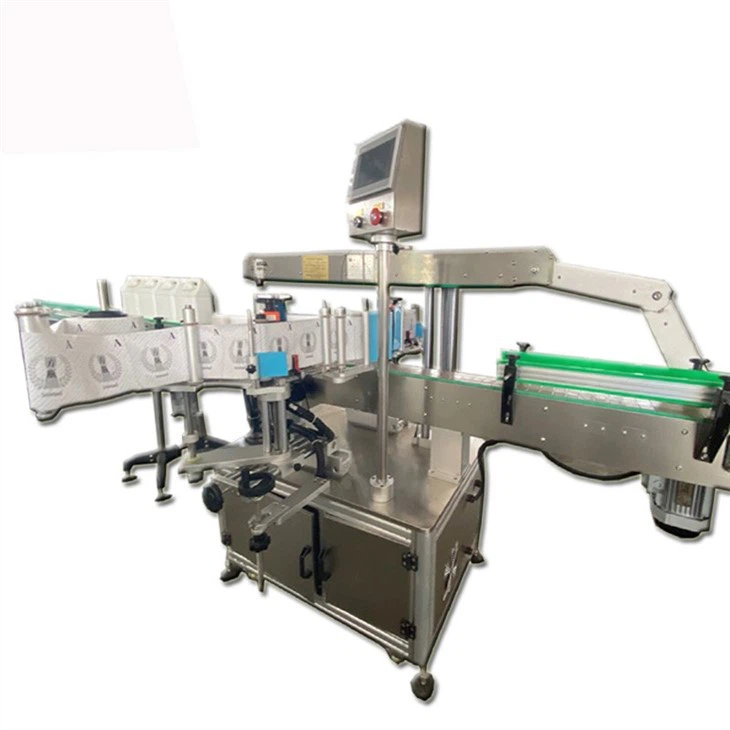
As a leading labeling machine supplier, we offer a wide range of labeling machines, including Double-sided Self-adhesive Labeling Machine and Single-sided Self-adhesive Labeling Machine. Our machines are equipped with advanced speed control systems, such as VFDs, PLCs, and servo motors, to ensure precise and efficient labeling.
We understand that every customer has unique production requirements, and we are committed to providing customized solutions that meet your specific needs. Our team of experts will work closely with you to understand your production process, recommend the most suitable labeling machine and speed control method, and provide comprehensive after-sales support.
Contact Us for Purchase and Consultation
If you are interested in learning more about our labeling machines and speed control methods, or if you have any questions or concerns, please feel free to contact us. Our sales team will be happy to assist you with your purchase and provide you with detailed information about our products and services.
Investing in the right labeling machine and speed control method can significantly improve your production efficiency, product quality, and overall business profitability. Don't miss out on the opportunity to enhance your labeling process. Contact us today to start your journey towards a more efficient and productive labeling operation.
References
- "Labeling Machine Technology and Applications" by John Doe
- "Industrial Automation: Principles and Applications" by Jane Smith
- "Motor Control and Drives" by Robert Johnson